


In This Post
- Wainscoting
- Beadboard
- Shiplap
- Board and Batten
- Coffered Panels
- Raised Panels
- Flat Panels
Back to Top.
Wood paneling is frequently connected with the abundant, intricate appearance of older homes. However wood paneling is progressively being utilized in modern homes to safeguard walls and to develop visual interest.
Wood paneling contributes to the expense of a space remodel, however it has lots of benefits that add to the home’s sturdiness and resale worth. Wood paneling is a soundproofing product. In dining spaces, paneling safeguards the lower half of the walls versus chair bumps. Natural wood paneling that is stained or clear-coated provides spaces a calming sensation. Wood paneling can be painted for a more official appearance.
Think about the lots of kinds of wood paneling for your home, consisting of wainscoting, beadboard, shiplap, and more.
Wainscoting
Wainscoting: Panels on the lower area of a space.
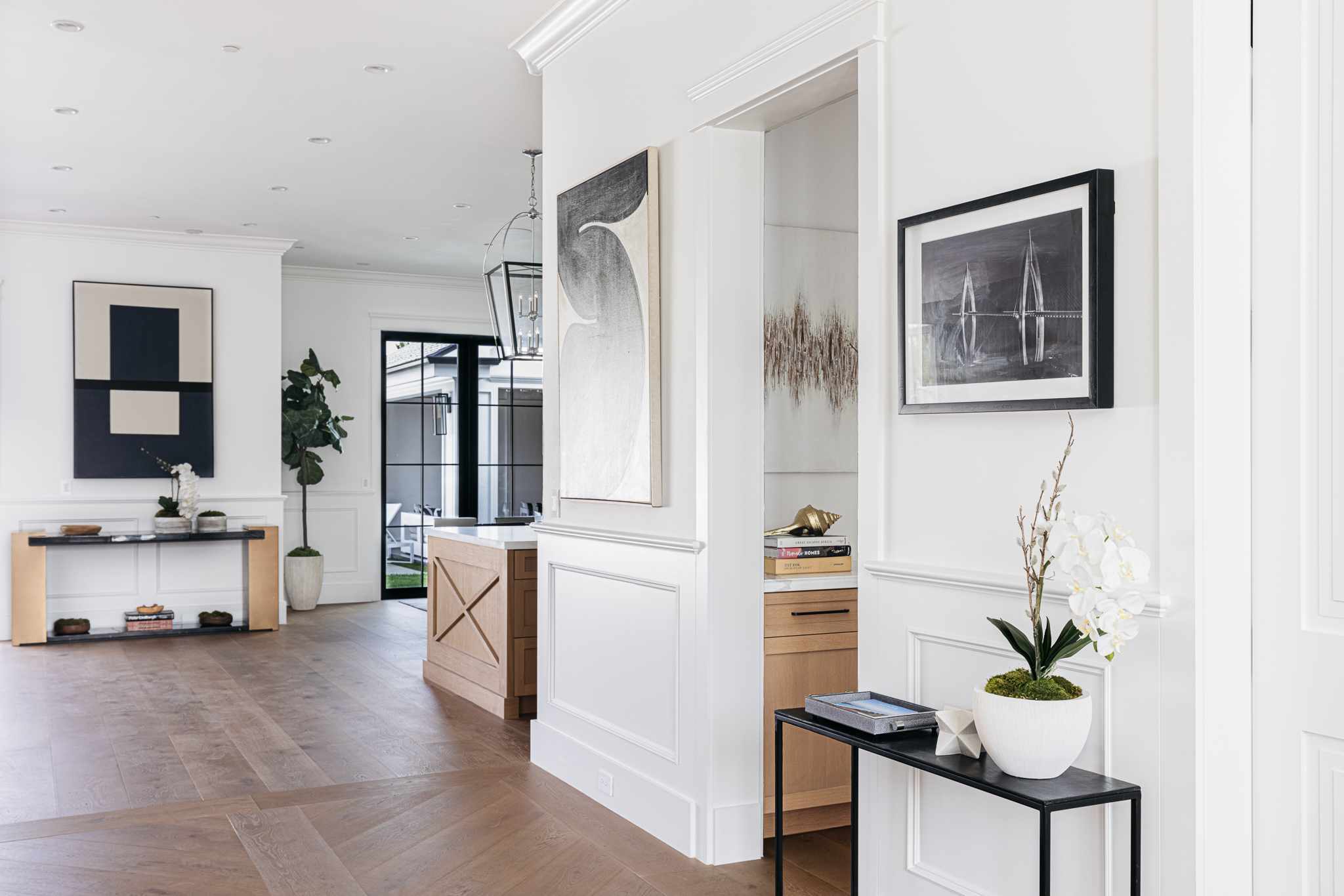
Wainscoting is any design of wood paneling that is on the lower half to one-third of a wall, normally around the whole space boundary. Wainscoting safeguards the wall from damage, particularly in locations vulnerable to effect, such as dining-room or kids’s spaces.
Wainscoting is typically put together from beadboard panels. Typically, a thin strip of chair rail is encountered the top of wainscoting as a visual cap and to get the effect from chair backs.
:max_bytes(150000):strip_icc()/GettyImages-172272855-ff83fb185ab64c6aa8a94f28bcaa3240.jpg)
Bobbieo/ Getty Images
Beadboard
Beadboard: Vertically grooved panels with a standard design.
Beadboard paneling is defined by long, constant vertical grooves and raised beads spaced every inch or 2.
Beadboard is discovered in private boards, each about 32 to 48 inches long by 3 to 4 inches large. Boards fit side-to-side. Additionally, beadboard can be bought in big panels as long as 8 feet which speed up the setup procedure. The beads and grooves are formed into the board in the factory.
:max_bytes(150000):strip_icc()/GettyImages-115578368-0e2fc9ee372d4780a2b24475b00b57ec.jpg)
Spiderstock/ Getty Images
Shiplap
Shiplap: Horizontal siding boards comparable to house siding.
Shiplap is a design of interior paneling whose motivation originates from an outside home siding of the very same name. Shiplap panels are long, horizontal boards that overlap each other along the long edges. The lip of the upper board overlaps a part of the lower board. In outside applications, this produces a joint that is weather-proof, tight, and steady.
Interior shiplap is more about look than function. Shiplap provides dining-room, bed rooms, halls, or living locations a rustic, captivating appearance. Shiplap can likewise be utilized on accent walls for a farmhouse or conventional appearance.
:max_bytes(150000):strip_icc()/GettyImages-1134581389-337b5c24a7794f378fac80d46d8cc193.jpg)
Tongue and Groove
Tongue and groove is a mode of accessory where the extending tongue on one board slides into the getting groove of a nearby board. Tongue and groove accessory is utilized for paneling, outside siding, ceilings, and floor covering.
Board and Batten
Board and Batten: Wide vertical molding pieces set up on bigger boards.
Board and batten paneling is notable for its routine pattern of large vertical molding boards called battens. Battens can be simply an inch large or a number of inches large and are positioned 6 to 10 inches apart from each other.
Board and batten paneling is a strong, serious appearance and was typically utilized in early 20th-century homes. The battens serve to cover the joints in between the boards. Extra battens are positioned in between the joints simply for looks.
:max_bytes(150000):strip_icc()/BoardandBatten-8bf78e56b356411ab18994cd9d3dbd80.jpg)
TriggerPhoto/ Getty Images
Coffered Panels
Coffered Panels: Inset squares in a grid pattern.
Coffers are frequently discovered in ceilings, where this grid pattern of inset squares separates flat aircrafts to develop visual interest. The name’s origin is substantial: cofre from French to indicate chest or cophinus from Latin significance casket. To put it simply, these squares are deeply sunk.
Coffers in wall paneling are various since there is less area behind the panels to sink the coffer. So, with wall paneling, it’s more the idea of a coffer than its complete execution. This appearance is developed by repairing vertical and horizontal boards to form the grid. Often, each square is routered or has actually trim contributed to it for a lot more decoration.
:max_bytes(150000):strip_icc()/GettyImages-158682808-a04414911fb840d2b2bf9e557a88ae6e.jpg)
Raised Panels
Raised Panels: Deeply diagonal squares or rectangular shapes in panels for a timeless appearance.
Raised panel is a kind of wood paneling has a series of rectangular shapes or squares that run in a line, apart 4 to 8 inches by vertical molding. Deep V-shaped bevels form raised wood panels, with horizontal rails at the leading and the bottom.
Raised panel is an extremely snazzy appearance; it’s frequently discovered in pricey older homes. Due to the deep bevels, raised panels develop deep shadows for an extremely appealing appearance.
Raised panels are frequently included into wainscoting. They can be bought pre-built and all set for setup. MDF board or polystyrene panels can be formed into the raised panel design. Additionally, they can be developed from scratch with slices of molding connected to flat panels.
:max_bytes(150000):strip_icc()/GettyImages-1013606490-2f5ae4ae83224bbdadf42cde9337f6a2.jpg)
Flat Panels
Flat Panels: Smooth, unadorned panels that impart a contemporary appearance.
Flat paneling is entirely smooth on the front and has no bevels, grooves, or beads. The only visual disturbance in a line of flat panels will be the joints in between the boards. The joints are often exposed; other times, they are covered with metal or wood strips.
Streamlined and smooth, flat paneling is a trademark of modern-day or modern style. The featureless face of the paneling lets the abundant wood grain of the panel take precedence. Less focus is on the boundary of the space– the paneling– with the space and its components taking a front seat.
:max_bytes(150000):strip_icc()/ModernWoodPaneling-33b92d3bea7c41d1b514524f88aadd1e.jpg)
tulcarion/ Getty Images
